Tornado Warning vs Tornado Emergency | Safe Rooms US
Tornado Emergencies vs. Tornado Warnings: What Every Homeowner Needs to Know When Minutes Count The difference between a Tornado Warning and a Tornado Emergency comes


We have over 25 years experience in the Safe Room and Storm Shelter Industry. Each of our Safe Rooms are custom built.
Our Safe Room will protect you, your family, or business when it is time to take shelter froma Tornado.
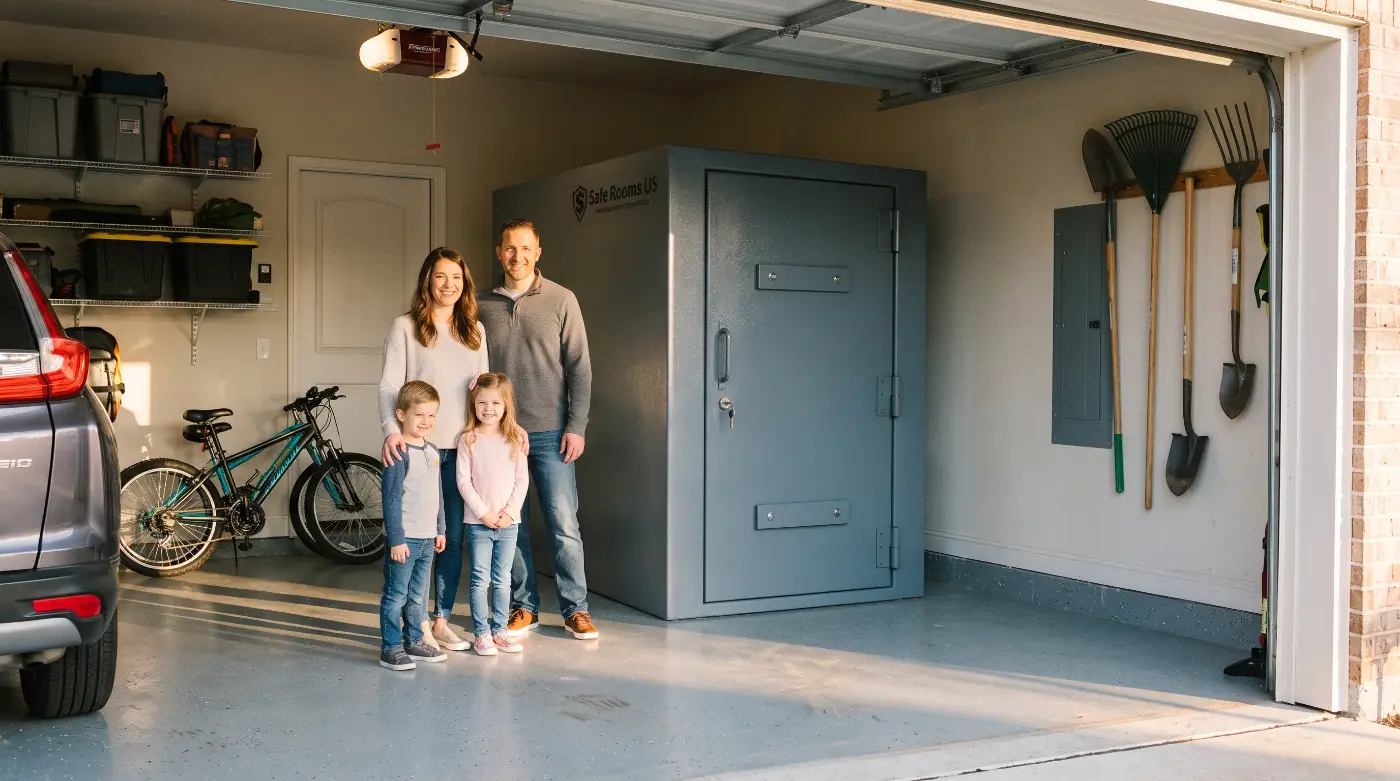
Safe Rooms US builds above ground Steel Safe Room Storm Shelters that are rated to withstand an EF5 tornado. They meet or exceed FEMA guidelines and have passed the Texas Test Impact Test
469-629-6000
Texas is home to deadly tornadoes that touch its soil frequently. At US Safe Room and Tornado Shelters, we design custom-built storm shelters that comply with FEMA safety standards for safe rooms. If you want to ensure your family’s safety during dangerous tornadoes, then let our professional staff assist you with high-impact-resistant and durable storms shelters.
Tornado storm shelters are designed to withstand high magnitude tornadoes such as F5 tornadoes. Their steel frame can sustain strong and dangerous tornado winds. If you’re looking for an affordable storm shelter company in Texas, then consider us at US Safe Room and Tornado Shelters. Give us a call for a free safe room consultation.
Our Safe Room Sizes meet and exceed FEMA guidelines and have Passed the Texas Tech Impact Test.
Our Safe Rooms are Custom Built to any size you would like,
including height
4’x4′ to 10’x25′
4’x4′, 4’x6′, 4’x8′, 6’x6′, 6’x8′, 8’x8′


Tornado Emergencies vs. Tornado Warnings: What Every Homeowner Needs to Know When Minutes Count The difference between a Tornado Warning and a Tornado Emergency comes

This infographic highlights the key features that strengthen safe room protection during severe weather events. It explains how reinforced walls, durable doors, impact-resistant construction, secure
Executive Summary Structural Parity: FEMA-compliant above-ground safe rooms and below-ground storm shelters provide equivalent, near-absolute survival rates against 250-plus mile-per-hour winds and airborne debris during